.png)
WHAT IF ....
everyday electromagnetic exposure is quietly affecting human physiology - and we’re only beginning to measure it?
This university-led research explores preliminary physiological indicators associated with electromagnetic field exposure – and evaluates the role of a portable intervention device.
University-Led Research Interview and Why Was It Initiated?
In this interview, the professor explains global screen time has surged in the post-pandemic era and with technology now embedded into work, education, and daily life – exposure to electromagnetic fields has become unavoidable.
While safety standards focus on thermal limits, growing attention is being placed on non-specific physiological symptoms reported by certain individuals.
This university-led research explores the scientific rationale, study design, and physiological markers under investigation in relation to electromagnetic field exposure, within a real-world usage context.
This research is conducted as part of an academic initiative within biomedical and diagnostic sciences.
Research Design Overview
Physiological Areas Under Investigation
The research focuses on observing changes across multiple biological domains, including:
Blood Morphology
Observation of red blood cell aggregation patterns (commonly referred to as rouleaux formation)
Microvascular Flow Indicators
Factors related to oxygen transport efficiency within circulation
Oxidative Stress Markers
Biomarkers associated with cellular stress responses
Inflammatory & Allergic Markers
Indicators linked to immune and histamine-related responses
Neuromodulatory Markers
Serotonin-associated physiological observations
Research Findings
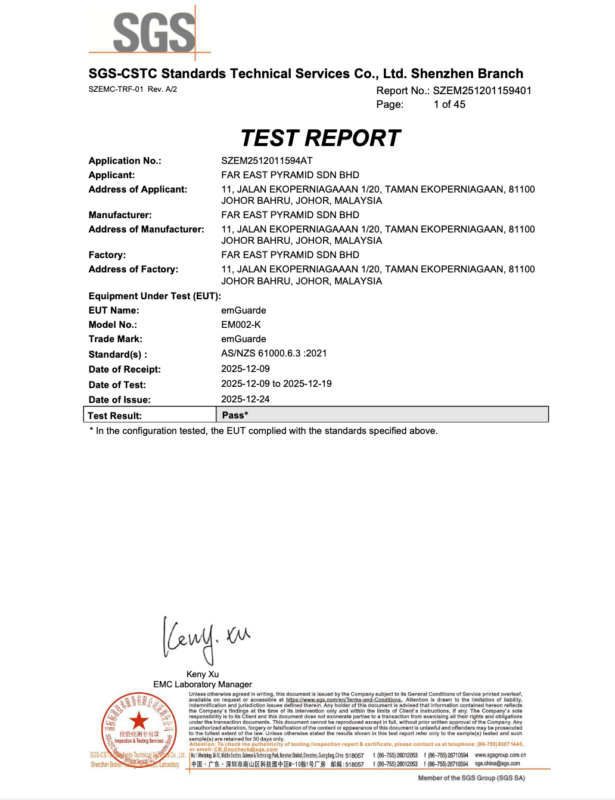
Independent university-led research observed measurable changes across multiple biological markers after participants wore emGuarde™ for three consecutive days.
Study Conclusion
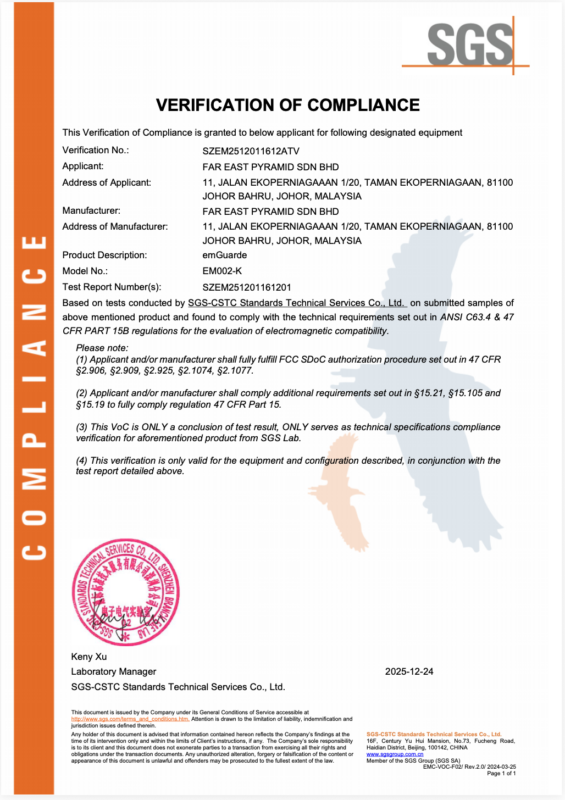
The findings from this university-led human study suggest that emGuarde™’s patented Harmonic Frequency Technology may support healthier biological function in today’s increasingly complex electromagnetic environments.
Observed improvements in circulation-related markers, serotonin activity, cellular stress response, and participant wellbeing provide encouraging evidence that emGuarde™ may help support the body’s natural ability to adapt to modern electromagnetic exposure.
While additional research is encouraged, these results demonstrate measurable biological changes following just three days of use.